Duro-Last PVC Single-Ply Roofing in Utah – 2026 Buyer’s Guide & Warranty Updates
Michael Naylor • December 4, 2025
Duro-Last Roofing in Utah
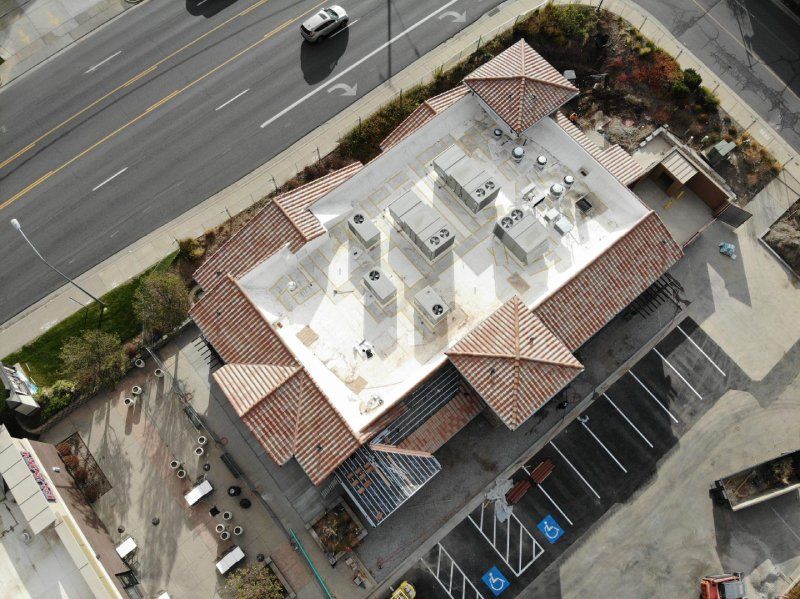
Duro-Last PVC single-ply roofing has quickly become one of the most trusted solutions for flat and low-slope commercial buildings across the Mountain West—and nowhere is this system more valuable than right here in Utah. Between high UV exposure, harsh freeze–thaw cycles, and unpredictable windstorms along the Wasatch Front, Utah buildings demand a roofing system that can withstand constant environmental stress without driving up maintenance costs. That’s exactly why many building owners researching Duro Last roofing Utah are now seeking clear, updated guidance before committing to a major capital project.
This 2026 Buyer’s Guide breaks down everything you need to know about PVC roof Utah options, how Duro-Last compares to other single ply roof Utah systems, and what has changed in the newest warranties and product lines. You’ll learn how Duro-Last performs in Utah’s climate, updated cost ranges, key questions to ask your Duro Last contractor, and which building types see the strongest ROI from PVC.
If you're considering a commercial roofing project in 2026, this guide will give you the clarity, comparisons, and Utah-specific insights you need to make a smart, long-term decision for your property.
Quick Takeaways
- Duro-Last is one of the strongest roofing options for Utah’s climate thanks to its UV-resistant PVC membrane, reliable hot-air–welded seams, and strong performance in freeze–thaw environments.
- Factory prefabrication is the biggest advantage—up to 85% of seams are welded in controlled conditions before installation, reducing leaks and speeding up timelines.
- Energy efficiency is a major benefit, with Duro-Last’s flagship white membrane reflecting up to 88% of solar energy.
- 2026 warranty options are best-in-class, including 15–30 year NDL warranties and no exclusions for ponding water.
- PVC often outperforms TPO and EPDM in Utah, especially for restaurants, industrial buildings, and facilities with chemical or grease exposure.
- Multiple membrane lines (Duro-Tuff, Duro-Fleece, EV, Rock-Ply) allow you to choose the ideal option for your building.
- Working with a certified Duro-Last contractor is essential to get full warranty coverage and proper installation.
Why Duro-Last Roofing Matters in Utah’s 2026 Commercial Roofing Landscape
Utah’s commercial roofs face extreme conditions few other regions experience. High elevation brings stronger UV radiation, which accelerates aging in many traditional roofing materials. Winters stack heavy snow loads onto flat roofs, and spring/fall introduce intense freeze–thaw cycles that can shred poorly welded seams. These cycles—rapid freezing at night followed by thawing during the day—are a leading cause of membrane cracking, blistering, and premature roof failure across Utah.
This environmental stress is one of the key reasons more building owners are searching for Duro Last roofing Utah solutions in 2026. Beyond durability, the business environment has changed: labor shortages, rising material costs, and tighter insurance requirements have made low-maintenance, low-risk roofing systems more valuable than ever.
Duro-Last’s PVC formulation and factory-prefabricated design align perfectly with these challenges. Up to 85% of welding is done in the factory, meaning fewer field seams—the most common failure point on a flat roof. Installations are cleaner, faster, and far more predictable, which is essential for schools, retail centers, restaurants, and industrial buildings that can’t afford extended downtime.
There’s also a financial angle. Many owners now face limited facility staffing and shrinking maintenance budgets. A roof that demands minimal upkeep—and is backed by powerful NDL warranties—reduces operational stress while protecting long-term capital planning. In short, Duro-Last provides predictable performance in an unpredictable climate.
What Is Duro-Last Roofing? A Clear, Utah-Specific Definition
At its core, Duro-Last is a custom-fabricated, single-ply PVC roofing system engineered for flat and low-slope commercial roofs. Unlike roll-based membranes (TPO, EPDM) that are cut and assembled on-site, Duro-Last roofs are measured, designed, and built in a factory to match your building.
This is a huge differentiator for PVC roof Utah projects. Utah’s weather windows are tight, and labor availability varies. With Duro-Last, the system arrives on-site with most seams already welded, leaving installers to handle only perimeter tie-ins, penetrations, and final detailing. This produces a faster, cleaner, and significantly more reliable installation.
For building owners evaluating single ply roof Utah options, it helps to view Duro-Last not as “membrane material” but as a pre-engineered roofing kit:
- Factory-welded seams
- Pre-made curb, stack, and drain flashings
- Exact-fit deck sheets
- Full manufacturer QA before shipment
This reduces rooftop welding—the most error-prone part of any membrane installation.
The system’s origin story adds useful context: Duro-Last was inspired by PVC pool liner technology, designed to remain watertight under chemical exposure and continuous moisture. That chemistry translates beautifully to Utah’s rooftop conditions: grease exhaust, industrial chemicals, standing water from snowmelt, and wide temperature swings.
Pairing the material benefits with a Duro Last contractor trained and certified by the manufacturer gives commercial owners a level of quality control that’s rare among flat-roof systems.
How Duro-Last Performs in Utah’s Unique Climate
Utah’s environment is a stress test for any commercial roof. Here’s how Duro-Last handles the biggest challenges.
High UV Exposure at Elevation
At 4,000–5,000 ft, UV intensity is significantly higher—accelerating degradation in asphalt and rubber-based systems. Duro-Last’s PVC membrane contains UV stabilizers and offers up to 88% solar reflectivity, dramatically reducing heat aging and extending service life.
Extreme Freeze–Thaw Cycles
Salt Lake Valley winters often shift above and below freezing several times per week. Water enters weak seams, freezes, expands, and damages membranes. Duro-Last’s hot-air–welded seams and non-wicking scrim prevent moisture intrusion, reducing the risk of freeze-related failures.
Wind Events Along the Wasatch Front
From canyon gusts to strong storm fronts, Utah buildings experience frequent high winds. Duro-Last offers mechanically attached and fully adhered assemblies with strong wind-uplift performance. Prefabrication helps ensure deck sheets lay flat with fewer stress points.
Grease, Chemicals & Industrial Exposure
Restaurants, manufacturing facilities, and car washes see rooftop exposure from fats, oils, grease, and chemicals. Unlike TPO, PVC is naturally resistant to these contaminants, making Duro-Last a top choice for Utah food-service and industrial properties.
Inversion, Air Quality & Pollution
Salt Lake’s winter inversion traps pollutants that accelerate degradation in some membranes. PVC’s chemical structure is more resistant to airborne contaminants, helping retain durability and reflectivity longer.
These climate-aligned benefits are a major reason commercial owners select Duro Last roofing Utah systems for long-term performance.
Duro-Last vs TPO vs EPDM: The 2026 Comparison Utah Buyers Need
When evaluating single ply roof Utah systems, the big question is usually: PVC, TPO, or EPDM? Here’s how they compare in Utah’s conditions.
UV Resistance & Heat Aging
- Duro-Last (PVC): Excellent; high reflectivity + stabilizers
- TPO: Reflective but varies widely by manufacturer
- EPDM: Poor reflectivity; absorbs heat; ages faster at elevation
Grease & Chemical Resistance
- Duro-Last: Best-in-class
- TPO: Vulnerable to grease/fats
- EPDM: Vulnerable to oils and solvents
This makes Duro-Last the best choice for restaurants, food plants, and industrial buildings.
Seam Reliability
- Duro-Last: Up to 85% factory-welded
- TPO: 100% field-welded
- EPDM: Field-taped or glued
Fewer field seams = fewer long-term leak points.
Installation Speed
Duro-Last’s prefabrication dramatically reduces rooftop labor, which is especially valuable during Utah’s short weather windows.
Cost & Warranty
While Duro-Last’s upfront price may be slightly above entry-level TPO, its life-cycle cost is often lower due to longer lifespan, fewer repairs, and stronger warranties.
2026 Duro-Last Product Line Overview
Duro-Last isn’t one membrane—it's a full product family designed for different building needs.
Duro-Last (40, 50, 60 mil)
The flagship membrane used in most PVC roof Utah installations. Highly reflective, durable, and ideal for commercial applications requiring long-term performance.
Duro-Tuff
A mechanically attached PVC option with enhanced strength. Good for buildings facing significant wind exposure.
Duro-Fleece & Duro-Fleece Plus
Fully adhered systems with extra cushioning—ideal when covering rough surfaces or when acoustic dampening is desired.
Duro-Last EV
A premium PVC formulation with optimized flexibility and chemical resistance.
Rock-Ply & Shingle-Ply
Aesthetic finishes for buildings where roof visibility matters—hotels, offices, universities, etc.
How to Choose
Instead of selecting “the cheapest,” owners should match the membrane to:
- Building usage
- Wind conditions
- Warranty goals
- Substrate type
- Energy preferences
A certified Duro Last contractor can provide a membrane selection plan tailored to your property.
Prefabrication: Why It’s the #1 Reason Utah Property Managers Choose Duro-Last
Prefabrication is Duro-Last’s secret weapon.
Up to 85% of seams are pre-welded in a controlled factory environment. That means:
- Less rooftop welding
- Fewer quality-control risks
- Faster installation in narrow weather windows
- Reduced labor cost
- Better long-term leak prevention
In Utah—where storms roll in fast and winter conditions limit build days—prefabrication is a massive advantage.
Duro-Last also fabricates custom accessories such as curb flashings, scuppers, and drain components with pre-welded skirts. These details are the most common failure points in traditional roofing. Factory-welded components dramatically reduce the risk.
One often overlooked benefit is documentation. A factory-measured and fabricated system creates a complete as-built record, which helps with:
- Insurance inspections
- Future maintenance
- Building resale value
When viewed through the lens of total risk reduction, prefabrication isn’t just a feature—it’s a strategy.
Energy Efficiency & Sustainability (What Utah Owners Should Know in 2026)
Energy costs in Utah aren’t as volatile as coastal markets, but commercial owners still feel summer cooling loads—especially in wide-span buildings like warehouses, gyms, and retail centers. This is where Duro-Last’s reflective white PVC membrane delivers measurable value.
High Solar Reflectance = Lower Cooling Loads
Duro-Last’s flagship membrane reflects up to 88% of solar energy, which helps prevent interior heat gain. Buildings under a reflective roof can experience 10–30% reductions in cooling demands depending on insulation, roof deck composition, and HVAC configuration.
For flat roofs typical in Utah—especially those with large square footage—this isn’t just an energy benefit; it’s a comfort and performance upgrade for occupants in upper-floor offices or mezzanine spaces.
Sustainability & ESG Value
Corporate and municipal owners increasingly track environmental performance. Duro-Last supports:
- Cool roof credits
- Lower carbon impact through reduced energy demand
- PVC membrane take-back recycling programs
- Environmental Product Declarations (EPDs) for transparency
The ability to recycle tear-off PVC membranes helps reduce landfill waste—an appealing factor for cities, school districts, and eco-focused developers.
Solar Compatibility
Given Utah’s growing solar adoption, many owners wonder whether PVC membranes work with ballasted or mechanically attached solar arrays.
Duro-Last is compatible with both, and the high reflectivity can even improve panel efficiency by keeping rooftop temperatures lower.
2026 Warranty Guide: What Changed & What Utah Owners Need to Know
Duro-Last is known for offering some of the strongest commercial roofing warranties in the industry. For 2026, these remain a major selling point for owners looking for predictable long-term performance.
Standard Warranty Tiers
- 15-Year NDL
- 20-Year NDL
- 30-Year NDL (for enhanced assemblies)
All warranties cover material + labor for manufacturer-approved assemblies. Many include consequential damage coverage, a rare benefit in the roofing world.
No Ponding-Water Exclusions
This is a huge advantage for flat and low-slope roofs in Utah, where snowmelt can create persistent ponding zones. While other membranes exclude ponding-related failures, Duro-Last warranties typically do not—reducing coverage gaps and owner risk.
High-Wind & Hail Options
Utah experiences frequent wind events along the Wasatch Front, and hailstorms can be severe. Duro-Last offers wind- and hail-enhanced warranties that are often required by:
- National retailers
- School districts
- Industrial facilities
- Insurance carriers reviewing risk profiles
Keeping Your Warranty Valid
The requirements are surprisingly simple:
- Maintain drainage
- Remove debris
- Use authorized contractors for repairs
- Schedule annual inspections
There’s no mandatory maintenance contract, giving you flexibility while preserving coverage.
Cost Guide for Duro-Last Roofing in Utah (2026 Edition)
Precise pricing depends on building complexity, insulation, substrate condition, and system type. But we can outline typical ranges seen across Utah in 2025–2026.
Typical Cost Ranges (per sq. ft.)
- Basic commercial retrofit: $8–$12
- Higher-performance installations (Duro-Fleece, thicker membranes): $10–$14
- Complex roofs with high penetrations: $12–$18
Your building’s structure matters. A vast warehouse with few penetrations might land near the lower range, while a restaurant with dozens of exhaust penetrations will be higher.
Factors Affecting Cost
- Insulation thickness (R-values increasingly required by Utah code)
- Existing roof condition
- Number of curbs, units & penetrations
- Access limits (downtown logistics vs. suburban sites)
- Membrane choice (Duro-Tuff vs. Rock-Ply, etc.)
Life-Cycle Value
Duro-Last’s strongest economic argument is its
predictable longevity.
Less downtime + fewer major repairs = lower total cost over 20–30 years.
For property managers, this is the number that matters—lifecycle cost, not sticker price.
What Types of Utah Buildings Get the Best ROI with Duro-Last
Restaurants & Food-Service Buildings
Grease resistance is essential here. PVC thrives where TPO struggles.
Retail Centers & Strip Malls
Fast installation minimizes tenant disruption—a major advantage for multi-tenant sites.
Warehouses & Manufacturing Facilities
Large square footage + high reflectivity = measurable energy savings.
Churches, Schools & Municipal Buildings
Low maintenance + strong warranties = predictable budgeting.
Car Washes & Auto Shops
Moisture, chemicals, and humidity are rough on most membranes. Duro-Last handles them well.
Each of these building types aligns with Utah’s most common commercial properties, making the system a frequent top choice for reliability and ROI.
How Duro-Last Installation Works (Step-by-Step)
Step 1: Roof Assessment & Measurement
Your Duro Last contractor inspects the structure, drainage, insulation, and existing system. Precise measurements are taken—not just of the perimeter but also of curbs, penetrations, and details.
Step 2: Factory Prefabrication
Measurements are sent to the Duro-Last manufacturing facility, where:
- Deck sheets
- Scuppers
- Curb flashings
- Stack flashings
- Corners and transitions
…are custom-built to your roof.
Step 3: On-Site Installation
Deck sheets are rolled out and welded at perimeter and field connections. Penetration flashings (pre-welded with skirts) are heat-welded into place.
Step 4: Final Inspection
Duro-Last sends a factory tech rep to perform a detailed inspection. The warranty is issued only after the system passes these quality standards.
This third-party inspection is a rare benefit—and one that many Utah commercial owners consider essential for peace of mind.
When Duro-Last Is Not the Right Choice
Even the best roofing system has limitations.
Situations Where Another System May Be Better
- Steep-slope roofs where shingles or metal are more appropriate
- Buildings with extreme rooftop mechanical abuse
- Roofs requiring specialized chemical resistance beyond standard PVC
- Decks with major structural issues that must be corrected before overlay
A trustworthy contractor will clarify these conditions before proposing the system.
2026 Maintenance & Care Guide for Utah Owners
Duro-Last is considered a low maintenance roof, but “low” doesn’t mean “none.”
Recommended Maintenance Tasks
- Annual inspection
- Clearing leaves and debris
- Checking drainage pathways
- Inspecting around penetrations
- Documenting repairs for warranty continuity
Snow Management
PVC doesn’t require special snow removal practices, but ensure:
- Drains remain unblocked
- Ice dams are monitored
- Heavy rooftop equipment isn’t leaking fluids onto the membrane
These tasks help maximize lifespan and preserve warranty terms.
Utah Case Studies: Real Local Projects
Olive Garden – Bountiful
A busy restaurant with significant grease discharge. Duro-Last’s chemical resistance made it the clear long-term solution.
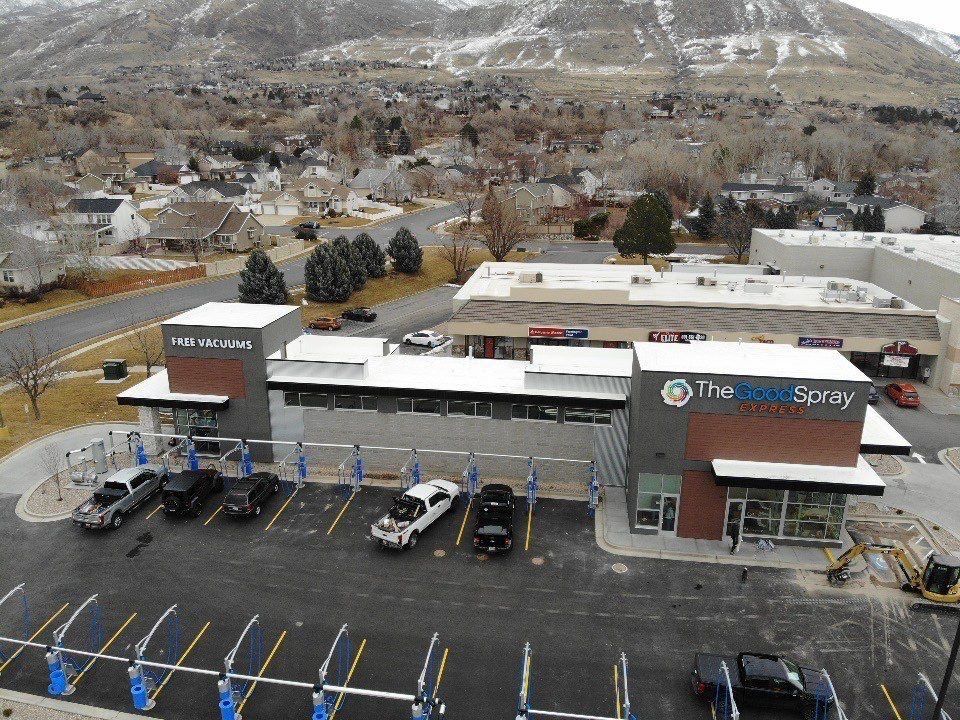
Goodspray Carwash – Farmington
Constant humidity, chemicals, and temperature swings. The prefabricated PVC system eliminated chronic leak issues.
Altice Corner – Ogden
A complex retail retrofit with multiple penetrations. Prefabrication cut installation time significantly and minimized business disruption.
These examples highlight Duro-Last’s versatility and reliability across Utah’s commercial landscape.
Choosing the Right Duro-Last Contractor in Utah
Your roof is only as good as the team installing it.
Why Certification Matters
Duro-Last trains, audits, and approves contractors before allowing them to install the system. Certified contractors understand:
- Prefabrication measurements
- Hot-air welding techniques
- Warranty assembly requirements
- Utah-specific wind and code considerations
Questions to Ask Before Hiring
- How many Duro-Last installs have you completed in Utah?
- What warranty options will my building qualify for?
- What challenges do you anticipate based on my current roof?
- Will a Duro-Last tech rep inspect the installation?
A reputable contractor will answer all of these confidently.
FAQs
1. How long does a Duro-Last roof last in Utah?
Typically 20–30 years, depending on membrane thickness and maintenance.
2. Is Duro-Last better than TPO for Utah restaurants?
Yes—PVC handles grease and chemicals better than TPO or EPDM.
3. Can Duro-Last be installed in winter?
Yes. Prefabrication reduces field welding, allowing cleaner winter installations.
4. What kinds of warranties are available?
15-, 20-, and 30-year NDL warranties, often with no ponding-water exclusions.
5. How much does Duro-Last cost in Utah?
Most projects fall between $8–$14 per sq ft, depending on complexity.
Conclusion: Is Duro-Last the Right Choice for Your Utah Property in 2026?
Choosing the right commercial roofing system in Utah isn’t just about upfront price—it’s about durability, predictability, and long-term building performance. With its factory-prefabricated seams, high reflectivity, best-in-class warranties, and proven resilience against Utah’s extreme weather, Duro-Last remains one of the smartest roofing investments for 2026.
Whether you're managing a school, restaurant, warehouse, or retail center, the system offers a combination of low maintenance, long lifespan, and reduced operational risk that few alternatives can match. And with updated warranty tiers, improved product lines, and better installation controls, now is the ideal time to consider the system for your next roofing project.
If you're ready to evaluate whether Duro-Last is right for your building, schedule a commercial roof assessment with a certified Utah contractor. A short consultation today can protect your property—and your budget—for decades.
Reach out anytime to discuss your project or schedule a roof evaluation.
References
Internal Links
- Commercial Duro-Last Roofing
https://bobharveyroofing.com/commercial-duro-last-roofing - PVC Membrane (Duro-Last) Roofing In Utah
https://bobharveyroofing.com/pvc-membrane-duro-last-roofing-in-utah - TPO Membrane for Flat Roofing
https://bobharveyroofing.com/tpo-membrane-for-flat-roofing - Roofing Services Overview
https://bobharveyroofing.com/services
External Sources
- Duro-Last — “Duro-Last Membrane”
https://duro-last.com/duro-last-membrane/ - Duro-Last — “Custom Fabrication”
https://duro-last.com/custom-fabrication/ - Clean Cut Roofing — “Freeze–Thaw Damage in Utah”
https://cleancutroofingsiding.com/utah-freeze-thaw-cycles-roof-damage-prevention/ - Reimagine Roofing — “Best Roofs for Utah Climate”
https://www.reimagineroofing.com/best-roofs-for-utahs-harsh-winters-and-hot-summers/ - Duro-Last EV EPD
https://duro-last.com/media/marketing/dl_university/sustainability/Duro-Last-EV-EPD_Final_1.4.2022_Athena.pdf